Cool Things Amongst the AI Chaos
I have mixed feelings about AI. I'm worried about what it means for jobs and businesses, but building a game in a day reminded me how exciting the creative opportunities are.

Joe Peel
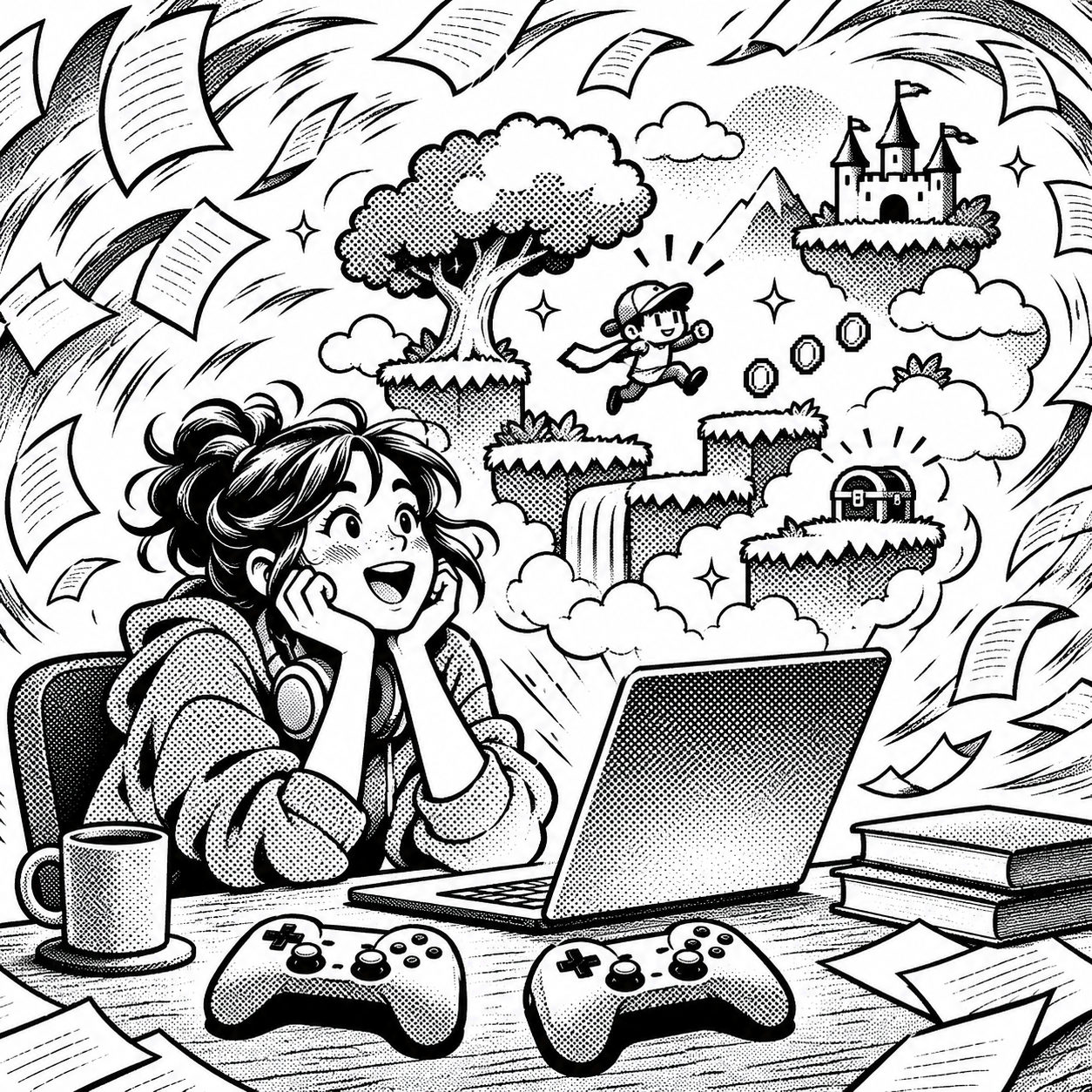
AI is already changing the way people work, the skills businesses need, and the workforce as a whole. I think it's going to become considerably more disruptive, and I'm genuinely concerned about the economic impact.
Despite offering training and advice around AI, particularly from a systems and automation perspective, I have mixed feelings about the whole thing. Secretly, deep down, I miss the old days. And when I say the old days, I'm talking about two or three years ago.
I've spoken to plenty of people in similar positions, not just software developers, but people working across professional services, consultancy, and other industries that are being significantly affected by AI. A lot of them feel the same way.
Business used to feel more predictable. People would spend years learning a skill, becoming exceptionally good at it, and building a career around that expertise. Some would become independent professionals. Others would build teams of consultants and specialists, grow agencies, or establish professional firms.
There was a reasonably understandable relationship between the time invested in developing expertise and the value that expertise could command. Now, that landscape is changing incredibly quickly. And frankly, it's a little scary.
AI feels like a superpower
Don't get me wrong. I love the technology. I love being able to create things that would previously have required enormous amounts of time, money, and specialist knowledge. It genuinely feels like having a superpower.
I just sometimes wish I was the only person who had it.
Because when everyone suddenly has access to the same superpower, the implications for existing businesses and professions become enormous. And this isn't just about my own work. I'm seeing it firsthand in the systems I'm helping businesses automate. Tasks that would previously have been someone's job can now be completed automatically.
But here's the really significant part. It's not just that AI can do the work more cheaply. It's that, increasingly, it can do the work to an exceptional standard. In some cases, the output isn't merely acceptable. It's genuinely better than what was being produced before.
That's the kicker. When something becomes dramatically cheaper and significantly better at the same time, the potential for disruption is enormous. And I don't think we've seen anything close to the full effects yet.
What happens to all those jobs?
I do believe something positive will eventually emerge from this disruption. There'll be a phoenix rising from the fire. Entirely new categories of jobs will emerge, just as they have during previous technological revolutions.
Think about roles like SEO consultant or digital marketing manager. Thirty years ago, most people wouldn't have known what those jobs were. Yet people have since built entire careers, businesses, and retirements around them. I'm confident new industries and professions will emerge around AI too.
But what happens in the meantime? That's what worries me. Particularly here in the UK, where we already have a substantial welfare bill and a middle class that's being squeezed increasingly hard.
If millions more people become unemployed, who pays the bill? What happens when many of the higher-paying jobs that currently generate significant income tax revenue disappear?
I don't pretend to have the answers. But I think these are questions we should be taking seriously.
Anyway, that's enough doom and gloom. Because, despite all those concerns, there's another side to AI that I find incredibly exciting.
The creative opportunities are ridiculous
AI is allowing people to pursue creative ideas that would previously have been completely inaccessible to them. And I've been experimenting with this quite a bit myself.
I've been working on a few SaaS products recently. In the past, some of these projects might have required a 12-month development contract and a substantial full-time commitment. Now, with perhaps ten minutes a day of prompting over four weeks, I've managed to build something pretty impressive.
Of course, there's still plenty of work to do. But much of the heavy lifting, the months and months of expensive development work, has effectively been completed. And that's extraordinary. It completely changes the economics of experimenting with new business ideas.
Rediscovering my interest in game development
I've always had an interest in video games. I'm not a particularly serious gamer these days, but I loved gaming as a child. And one thing I've always had a particular affection for is couch co-op gaming.
I miss the days when gaming was a social activity. You'd go around to your mate's house, sit on the sofa, and play games together. Now, so much of gaming has moved online. There are obviously benefits to that, but I also think we've lost something along the way. Gaming has, in some ways, become a more isolated activity.
I've always wanted to make my own couch co-op game. And I find it disappointing how limited the options can feel today, outside of certain Nintendo Switch titles. Look back at the PlayStation 2 and GameCube eras. There were loads of fantastic local multiplayer games.
Even with newer releases, it sometimes feels as though split-screen gaming is treated as an afterthought. I recently saw the new Star Wars racing game, Galactic Racer, which didn't include split-screen multiplayer. I remember playing the original podracing game in split-screen, and it was brilliant.
Apparently, including split-screen in the new game was considered too much of a stretch. Which, frankly, I think is nonsense.
Anyway, I digress.
Making a game in a day
I've experimented with Unity game development before. Not because I had ambitions of becoming a professional game developer, but because I thought it would be a fun hobby. Maybe I'd eventually make a mobile game. Perhaps one day I'd release something small on Steam. Nothing particularly ambitious.
But the problem was the learning curve. Even getting reasonably comfortable with the basics could take months. And producing something genuinely good would require years of practice, dedication, and probably quite a lot of frustration. It would have to be a real labour of love. So, eventually, I put the idea aside.
Then last week, I decided to give it another go, this time with AI helping me. Over the course of a single day, working intermittently between other things, I managed to build a working game.
And not just a completely basic tutorial project. It was something resembling an idea I'd had in my head. Something I might previously have expected to achieve after two, three, or perhaps even six months of learning. And I'd managed it in a fraction of the time, without having to work particularly hard.
Now, let's be clear. It's not a polished game. It's certainly not commercially viable in its current state. There's an enormous difference between building a working prototype and releasing something people would actually pay money for.
But that's not really the point. The point is that I've been able to explore an idea that previously felt completely out of reach. And I'm genuinely interested to see how far I can push it.
From imagination to digital reality
I've spoken before about how I think the future of business software will increasingly involve on-demand applications. You need something. You describe what you want. AI works with you to build it. And before long, you've got a functioning application tailored to your requirements.
Perhaps we're not quite at the point where you can think of something and have it materialise instantly. Maybe that comes further down the line with advances in computing and AI. But we're moving towards a world where building software becomes dramatically more accessible.
And perhaps the same thing is going to happen with game development and other creative industries. You have an idea. You imagine how something should look, feel, or behave. And technology helps turn that imagination into something resembling digital reality.
That's an incredibly exciting prospect.
Finding the good amongst the chaos
I remain concerned about what AI means for jobs, businesses, and the wider economy. I think we're going to experience some significant disruption, and I don't think we should underestimate it.
But at the same time, I'm genuinely excited by the creative opportunities it's opening up. People are gaining access to capabilities that previously required years of training, specialist teams, or substantial financial investment. Ideas that would have remained ideas can now become working prototypes in days. And that's pretty amazing.
So while I don't know exactly what the future looks like, and I suspect there'll be plenty of chaos along the way, I'm going to keep experimenting. Because amongst all the uncertainty, there's some really cool stuff happening.
Related articles

Will we all build our own apps?
A colleague built his own fitness app because none of the existing ones did what he wanted. I wonder how soon the rest of us will be doing the same, and what that means for developers like me.
How AI is changing my role as a software engineer
A few years ago, I interviewed for a migration contract expected to take six months. A recent project has made me realise just how much my work has changed.

About Joe Peel
I’m the software engineer behind HiTide. Let’s have a virtual coffee, chat about your systems and see where the conversation takes us.